I believe great cultures require great systems.
Craft doubled in team size over two years. That growth was healthy, but it surfaced the frictions that come when systems haven't caught up to scale. We launched an initiative to refine how we work together.
I partnered with a Craft partner and a design director to assess where the team was and co-create where we wanted to go. We started with a survey to surface misalignment, frustration, and stressors, then worked through a structured process to address them.
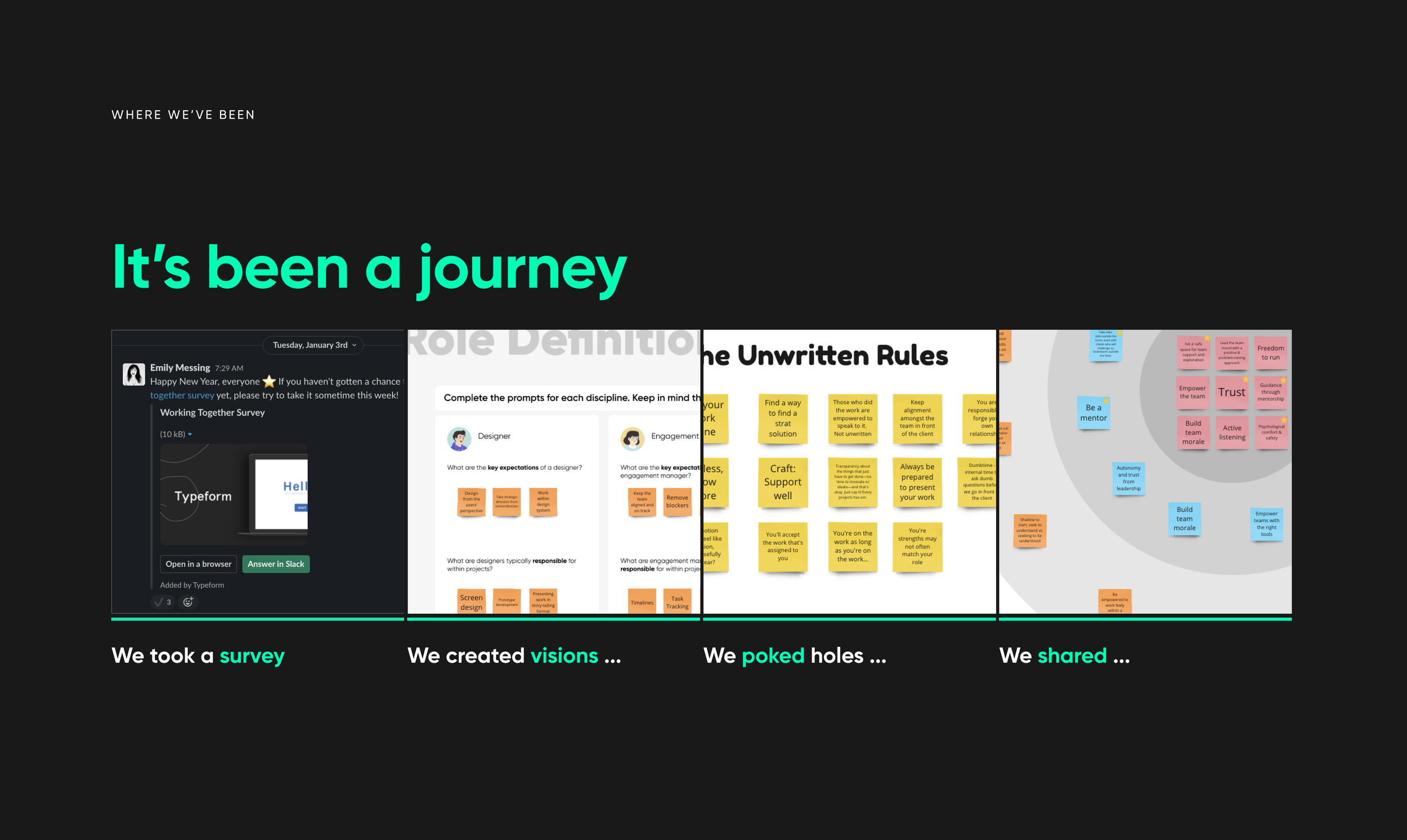
We decided to apply our human-centered design process to ourselves. We split the team into working groups and asked each to define a vision for the future of Craft.
The prompt was simple: “Imagine you are starting a research and design agency from scratch. How would you organize it? What values would you hold dear? How would you ensure the culture was lived fully on a daily basis?”
We brought the teams back together to poke holes in the visions they created, answering the questions, “How does Craft vary from the vision you defined? Why does it vary? In what ways would you change the ways we work together to better meet your vision?”
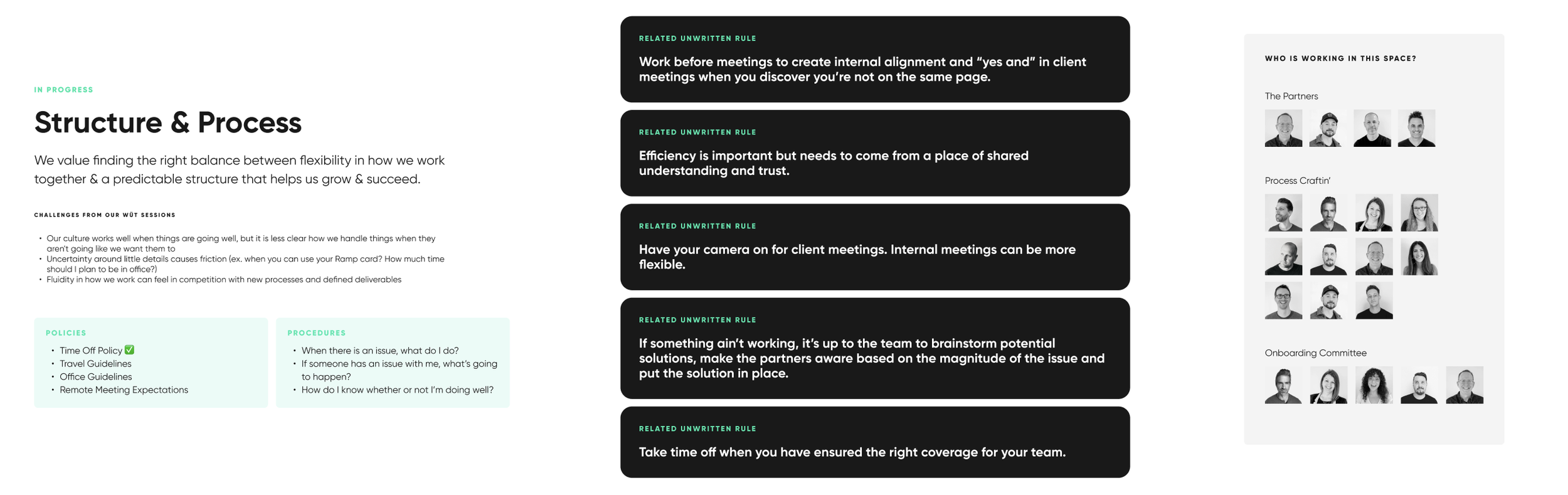
The teams iterated, then shared their visions across the full group along with proposed changes to how we worked. We came out of it with two things:
A clear picture of what was working that we wanted to protect as we grew
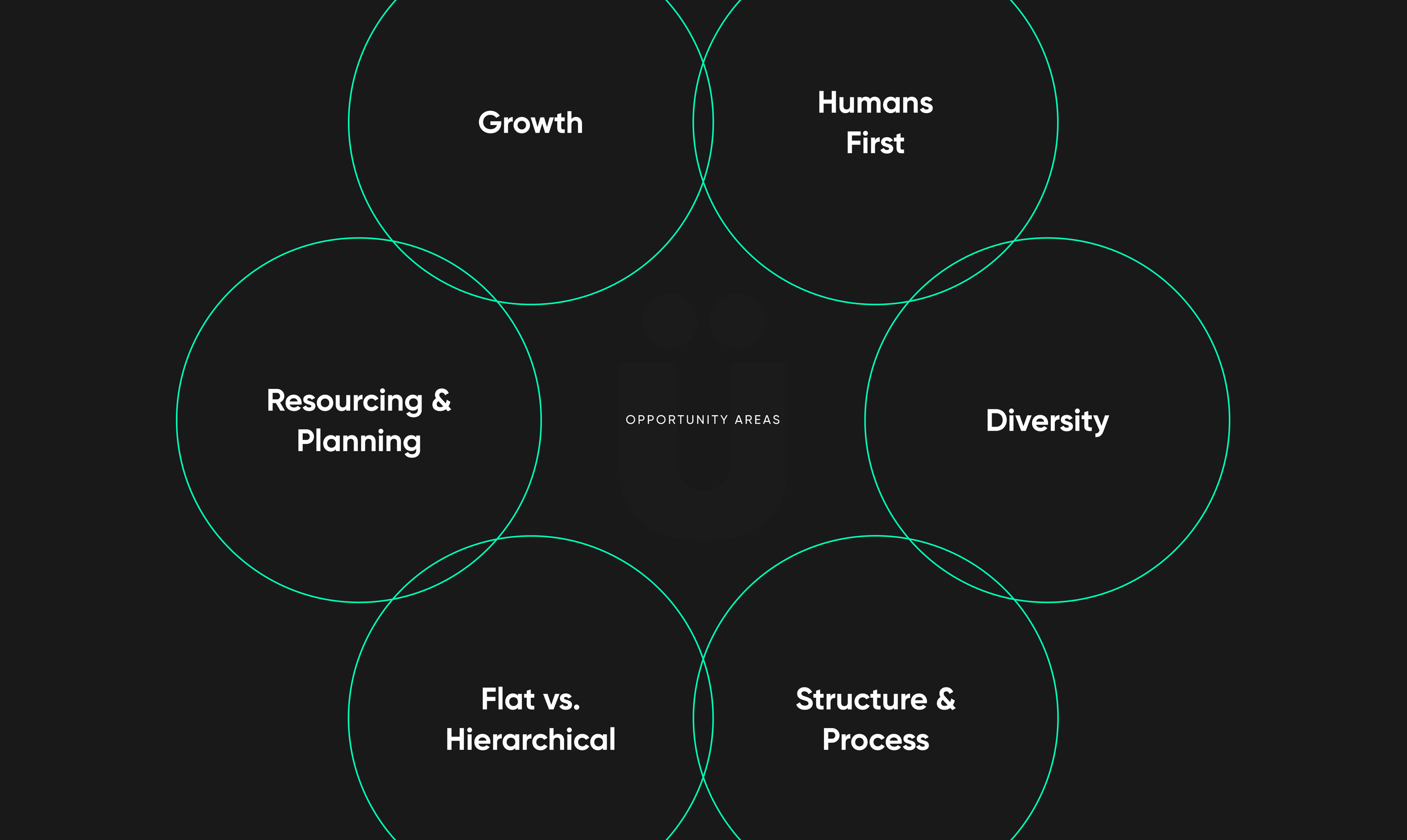
Six opportunity areas to focus on
Each opportunity area became a working group, led by people on the team with genuine interest in that area.
We also learned the team was operating on a lot of unwritten rules. We ran an exercise to write them down, then rewrote the ones that no longer served us, or that didn't reflect how we actually wanted to show up. The output was a revised Craft philosophy that better matched how we wanted to work together and clarified our stance on the issues that mattered most.
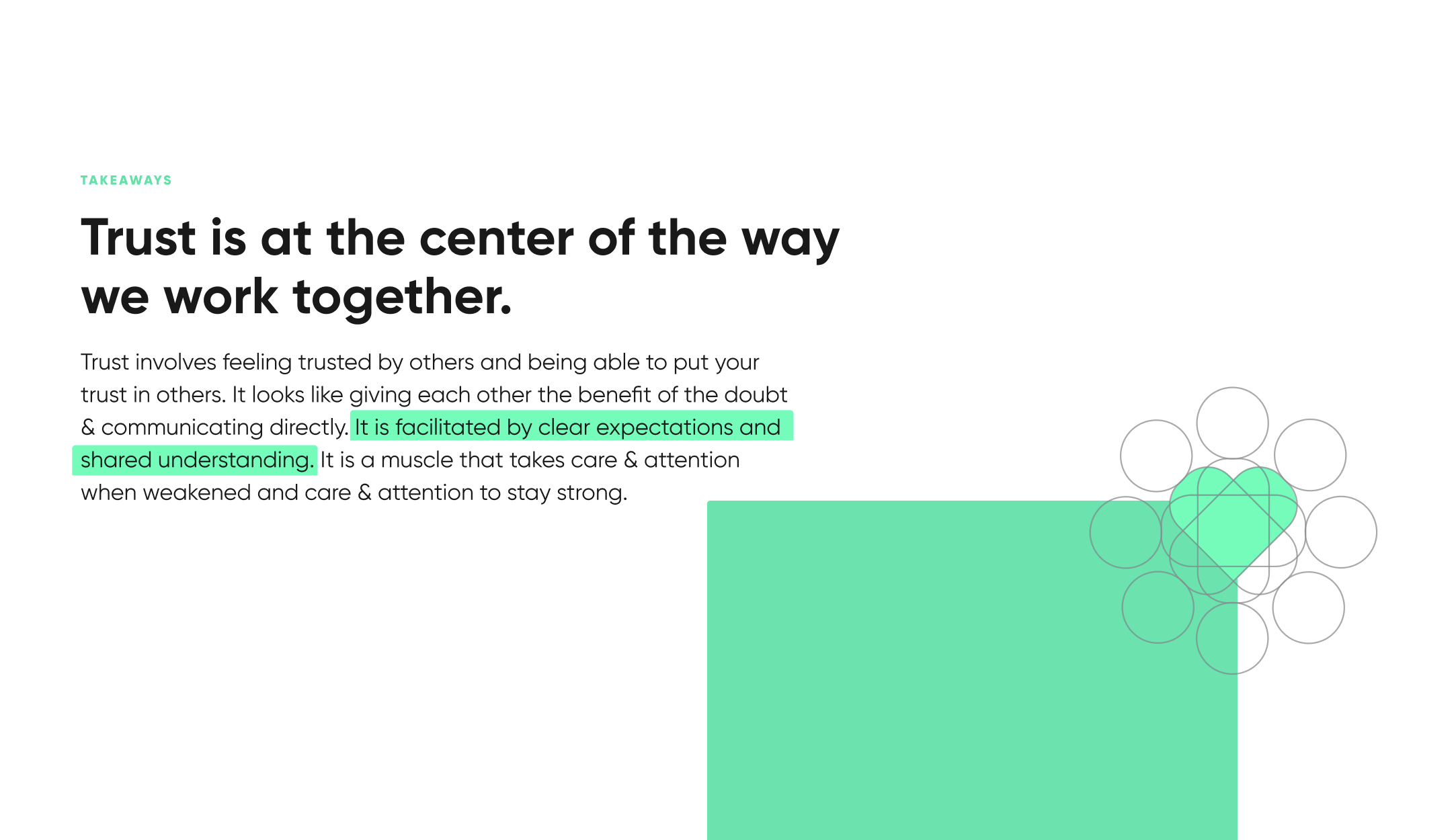
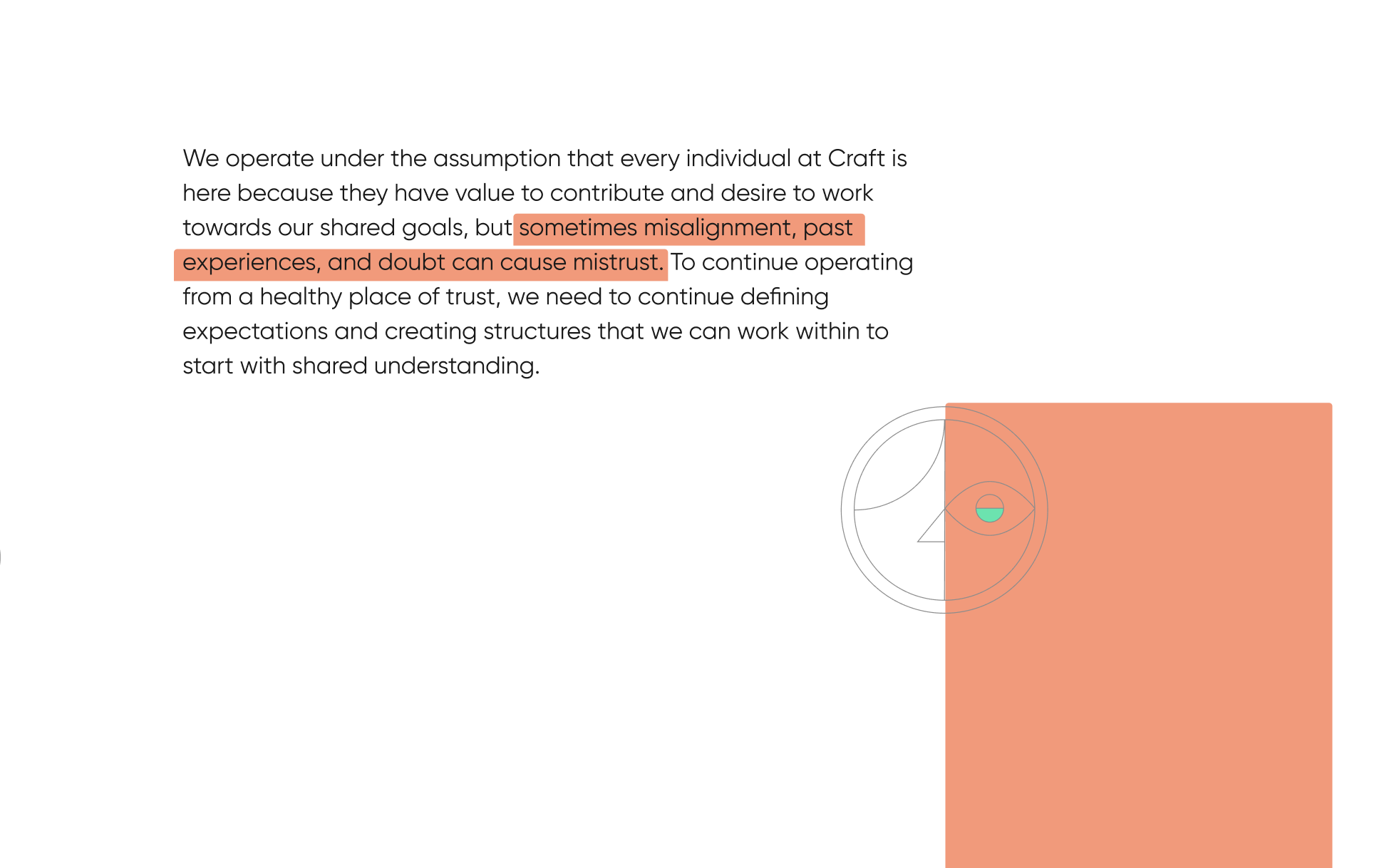
This initiative gave us more than working groups and opportunity areas. It built trust across the team, connected people who hadn't worked together before, and gave us a shared vision to move forward with.
Prior to being acquired, Craft had a 100% retention rate through growth from 15 to 30 to 40. That wasn’t an accident. It came from efforts like this one and from leaders who trusted the team to define what they needed and gave them the autonomy to make it happen.